
Reading Intent
- Pupils develop a love of reading through: listening to adults reading books out loud; independently reading books they have chosen; reading out loud with good intonation.
- Phonics is effectively taught in Foundation Stage and Key Stage 1 and pupils confidently apply their phonics skills to early reading. Where children are not effectively applying phonics knowledge additional support is offered to pupils in all year groups.
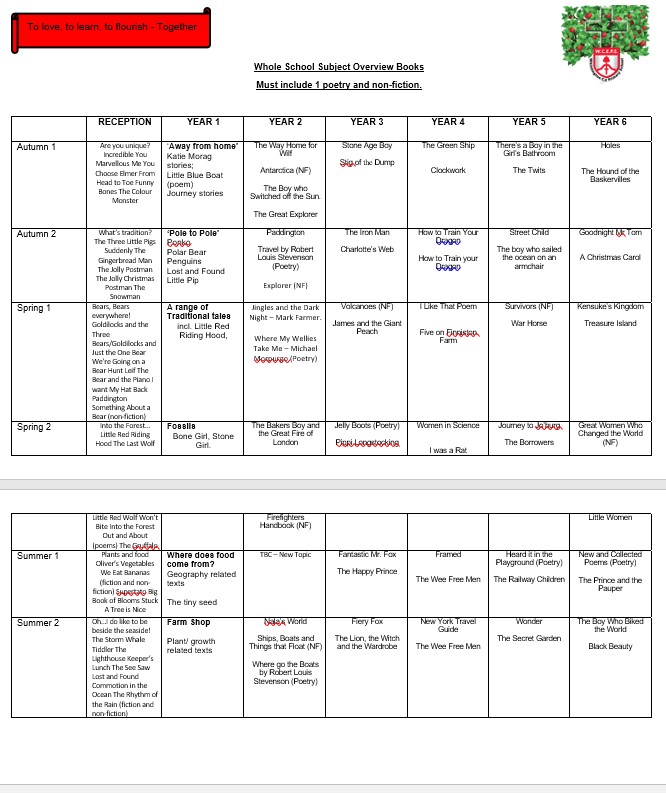
- Pupils read widely including: fiction; non-fiction; poetry texts.
- Children read for a variety of purposes: reading for pleasure; undertaking research; in everyday situations (eg following written instructions).
- Pupils develop a deep understanding of the text through a clear understanding of the eight reading domains (five domains in Key Stage 1).
Implementation
- Teaching staff model what good reading sounds like. Speech and language support for children who struggle to read out loud. Reading out loud will be a regular part of the teaching of reading. Teachers will work on improving: clarity, pronunciation, speed, fluency and volume.
- In Reception and Year 1 are taught daily phonics through Little Wandle. Year 2 in the autumn term follow phonics approach into spelling. Rapid catch up groups support those in other year groups who are falling behind or risk of falling behind.
- Pupils listen to a wide range of books (both fiction and non-fiction) read to them by the teacher.
- KS1- reading practise three times a week teaching decoding, prosody and comprehension.
- The accelerated reader programme will be used by staff ensure that pupils are reading books at a suitable level. Half termly reviews of reading will identify any problems with the amount and variety of books read by all pupils and guidance will be given to pupils about reading more appropriate and varied texts. Pupils using the accelerated reader scheme will be regularly rewarded for reading regularly. Reading a variety of text types – books, internet, magazines etc. Class readers will ensure that pupils are really familiar with carefully chosen texts which they can read and explore with classmates.
- All staff teach the understanding of texts through the reading domains. Teachers focus on individual domains and teach pupils the best way to demonstrate their understanding of text through each domain.
Writing Intent
- Pupils will develop specific writing skills which are then applied in independent writing tasks (see Writing – Sequence of Teaching Skills in writing).
- Pupils will enjoy the writing process and see themselves as effective writers who engage their reader by making use of: a range of sentence types; effective punctuation; excellent vocabulary
- Pupils will make effective use of writing strategies such as: cohesion; expanded noun phrases; dialogue to convey character; formality, to write at greater depth (see Writing at Greater Depth abridged)
- Pupils will be able to write quickly and neatly because they have a fluent handwriting technique.
- Pupils will make effective use of editing and proof reading to improve the impact of their writing.

If you would like any further information about our English Curriculum at Whittington, please do not hesitate to contact the School.
English Curriculum Lead – Mrs Kelly Leeming
Head of Curriculum – Mrs Kelly Leeming